How to Sell a Home in Clackamas County: A Local REALTOR’s Guide
Selling a home in Clackamas County isn't just about taking some photos, putting it on the MLS, and waiting for an offer.
At least, it shouldn't be.
I've worked with sellers throughout Clackamas County, from more suburban homes in Oregon City, Milwaukie, Happy Valley, and West Linn to properties farther east in Sandy, Boring, Beavercreek, Eagle Creek, and the surrounding rural areas.
The most important thing I've learned is that the work you do before the house hits the market can have just as much impact on the sale as what happens after it is listed.
And not every property should be prepared, priced, or marketed the same way.
Here's how I approach selling a home in Clackamas County.
1. Start With the Property, Not the Listing Price
One of the first questions nearly every seller asks is:
"What do you think my house is worth?"
That's obviously important.
But before I get too focused on price, I want to understand what we're actually selling.
How old is the roof?
How old is the furnace?
Has the electrical panel been updated?
Are there additions or improvements that may need additional research?
Is the property on sewer or septic?
Public water or a private well?
Are there drainage issues?
An underground oil tank?
An HOA?
A shared driveway?
An easement?
These things don't necessarily make a home difficult to sell.
But they can become problems when nobody discovers them until a buyer is already under contract.
The fewer surprises we have during the transaction, the more control the seller usually has.
That's why I like doing as much homework as possible before the sign ever goes in the yard.
2. Consider a Pre-Listing Inspection
I'm a big believer in pre-listing inspections for the right property. It's not always applicable, and it's always your choice.
The reason I like them is simple.
I'd rather have you discover a problem on your own terms than have a buyer discover it three weeks into the transaction.
Imagine finding out during the buyer's inspection that there is moisture in the crawlspace, a plumbing leak, or an electrical issue.
Now you have a buyer under contract.
There's an inspection deadline.
The buyer may be nervous.
Their agent is involved.
And you're negotiating with a clock running.
Discover that same problem before listing and you have choices.
You can repair it.
Get estimates.
Price accordingly.
Or disclose it and sell the property in its current condition.
That's a much better position to be in.
It can also change the inspection negotiation later because buyers making an offer already had an opportunity to understand more about the property's condition.
3. Disclose What You Know
This is an area where sellers sometimes make things harder than they need to.
My philosophy is pretty straightforward:
Disclose, disclose, disclose.
If there's something material about the property that you know, hiding it rarely improves the situation.
The old leak.
The drainage issue.
The repair behind the wall.
The neighbor issue.
The abandoned oil tank.
Whatever it is.
Selling a house doesn't mean pretending it's perfect.
Most buyers don't expect perfection.
They want to understand what they're buying.
And I'd much rather have someone make an informed offer knowing the property's condition than discover something later and wonder why nobody told them.
4. Rural Clackamas County Homes Need a Different Game Plan
This is one of the biggest differences between selling homes here and selling in a completely suburban market.
Drive east from Oregon City and Clackamas and things can change quickly.
Now we may be dealing with:
- Private wells
- Septic systems
- Acreage
- Shops and outbuildings
- Private roads
- Shared driveways
- Easements
- Water rights
- Farm or forest zoning
- Generator systems
- Propane
- Unpermitted structures or improvements
Those aren't necessarily negatives.
In fact, they're exactly what some buyers are looking for.
But rural property creates questions that should be answered before the buyer starts asking them.
For example, Oregon has specific water-testing requirements when certain properties supplied by domestic wells are sold. Your responsibility is proving the water is a potable water source, do it now before listing to save time during inspections. Water testing can take weeks when they are busy.
If a property has septic, I also want to know what we can about the system before listing.
Where is the tank?
Where is the drain field?
How old is it?
Are permits available?
Has it been serviced?
Selling acreage requires more preparation because you're not simply selling the house.
You're selling the land and all of the systems that make that property work.
5. Decide What Is Actually Worth Fixing
This is where sellers can waste a lot of money.
You usually don't need to remodel the entire house before selling it.
I've seen sellers spend money on improvements that buyers barely cared about while ignoring inexpensive things buyers noticed immediately.
My priority is usually:
Condition first. Presentation second. Remodeling third.
Fix the obvious defects.
Take care of deferred maintenance where it makes financial sense.
Then focus on presentation.
Fresh paint is one of my favorites.
A neutral off-white can completely change how a house feels without requiring a major renovation.
Cleaning matters.
Landscaping matters.
Lighting matters.
Small repairs matter.
You don't necessarily need a $60,000 kitchen remodel.
Sometimes you need $3,000 worth of paint and a really good cleaning.
The question isn't:
"What can we improve?"
It's:
"Which improvements are most likely to help us sell the home?"
Those are very different questions.
6. Stage the Home for the Buyer, Not the Seller
Staging has always been a big one for me.
And I don't say that because every house needs expensive furniture brought in.
Staging is really about controlling what the buyer notices.
I've had sellers see the difference before the professional photos are even taken.
Furniture helps buyers understand room size.
Usually staging furniture is small making the room feel bigger.
I love my really big comfy sectional in my house, but it wouldn't help me sell when the time comes.
It draws attention toward the home's best features and away from things that don't matter.
Most importantly, it helps buyers picture themselves living there.
That's the goal.
A buyer isn't purchasing your furniture.
But they're absolutely reacting to how it makes them feel while touring the home.
7. Your Photos Are Your First Showing
The first showing usually doesn't happen at the house anymore.
It happens at the buyer's home on their couch scrolling on thier phone or computer screen.
A buyer may look through dozens of listings before deciding which homes deserve an in person tour.
That means your photography isn't just documentation.
It's marketing.
The order of the photos matters.
The first photo matters.
Lighting matters.
Staging matters.
How rooms connect matters.
And the story those photos tell matters.
The goal isn't to make the home look different from reality.
It's to show the property at its absolute best so the right buyer wants to come see it.
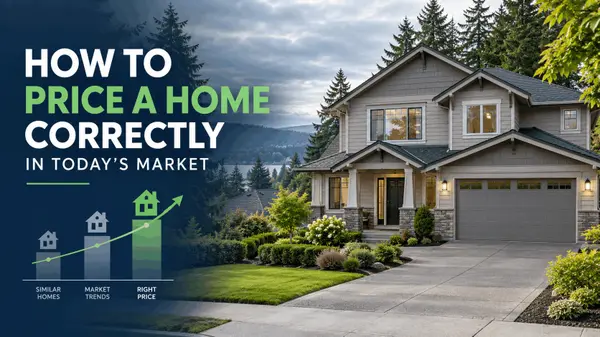
8. Pricing Isn't About Picking the Highest Number
This is probably where the biggest strategic decision happens.
Sellers understandably want the highest possible price.
So do I.
But the highest asking price and the highest selling price aren't necessarily the same thing.
I look at:
- Recent comparable sales
- Current competition
- Pending homes when information is available
- Price per square foot
- Lot and location
- Condition
- Updates
- Market time
- Price reductions
- Buyer activity
- The home's likely buyer pool
And then I ask another question:
What happens when we put this house on the market at this price?
That's the part an online estimate can't tell you.
Pricing is a marketing decision.
We want to position the property where buyers see the value and feel enough urgency to act.
Starting too high can mean missing the buyers who were most excited during the first couple of weeks.
9. The Clackamas County Market Isn't One Market
This is extremely important.
There isn't really one "Clackamas County housing market."
A rural property in Beavercreek isn't competing with a subdivision home in Milwaukie.
A house in West Linn has a different buyer pool than acreage outside Sandy.
Even two homes a mile apart can perform differently because of:
- School boundaries
- Lot size
- Traffic
- Neighborhood
- Condition
- Floor plan
- HOA
- Views
- Parking
- Acreage
- Outbuildings
That's why countywide statistics are useful for understanding direction, but they're not enough to price an individual home.
The market that matters most is the market surrounding your specific property.
10. Have a Strategy for the First Two Weeks
I pay very close attention to what happens immediately after a listing goes live.
Are buyers clicking on it?
Are agents showing it?
Are people saving it online?
Are we getting second showings?
What are buyers saying?
Are we getting interest but no offers?
Or are we getting almost no activity at all?
Those are different problems.
If buyers are showing up but not writing offers, we need to figure out what's stopping them.
If they're not showing up at all, price or presentation may be preventing us from getting through the front door.
The worst thing a seller can do is ignore what the market is telling them for six weeks and then react.
The market gives us feedback. Our job is to listen to it.
11. Don't Just Look at the Offer Price
When offers come in, I don't immediately jump to the biggest number at the top of the page.
I want to know:
How is the buyer financing the purchase?
How much earnest money are they offering?
How much are they putting down?
Are they asking for closing costs?
What's the inspection period?
Is there an appraisal contingency?
Do they need to sell another property?
What's the proposed closing date?
Are there unusual contingencies?
How strong is the buyer's financing?
A $700,000 offer isn't automatically better than a $690,000 offer.
The net proceeds, probability of closing, and terms of the contract matter.
This is where good representation becomes extremely valuable.
12. Getting an Offer Is Only Half the Job
Sellers sometimes think the hard part is getting the house under contract.
That's only the midpoint.
We still have to navigate:
Inspection.
Repair negotiations.
Appraisal.
Financing.
Title.
Possibly septic or well issues.
Possibly HOA documents.
Possibly another property that needs to close.
And eventually closing and possession.
My goal isn't simply to get someone to make an offer.
It's to get from listed to closed while protecting the seller's position along the way.
Michael's Take
After years of working with sellers, I know without a doubt that the best home sales come from intentional preparation.
The seller understands the property's condition.
We know where potential problems are.
We've decided what is worth fixing and what isn't.
The house is presented correctly.
The price has a strategy behind it.
And when an offer arrives, we're evaluating the entire deal instead of getting distracted by one number.
That doesn't mean every transaction goes perfectly.
Real estate rarely works that way.
But preparation gives you options.
And options give you leverage.
My job as the listing agent isn't just to advertise your house. It's to help you make better decisions from the day we start preparing the property until the day the sale closes.
Frequently Asked Questions About Selling a Home in Clackamas County
How long does it take to sell a home in Clackamas County?
It depends heavily on location, price range, condition, property type, and pricing. Countywide statistics can provide a general benchmark, but the most useful comparison is the recent activity among homes that actually compete with yours.
Should I get a home inspection before selling?
Not every seller needs one, but I frequently recommend considering a pre-listing inspection. Finding potential problems before listing gives the seller more time and more options for deciding how to handle them.
Do I need to remodel my house before selling?
Usually not. I would rather identify improvements based on their likely impact on the sale instead of remodeling simply because something looks dated. Cleaning, paint, repairs, landscaping, lighting, and staging can sometimes provide more value than expensive renovations.
Should I stage my home?
I strongly believe in staging when it helps buyers understand and connect with the property. That doesn't always mean fully furnishing an empty home. The right strategy depends on the house, but presentation matters.
What do I need to do if my Clackamas County home has a private well?
Oregon has specific testing requirements for the sale or exchange of real estate with qualifying domestic wells. Sellers should identify the water source early and understand what testing and documentation will be required before closing.
What about selling a home with a septic system?
Start gathering information about the septic system before listing, including permits, maintenance records, tank location and any previous inspections or repairs you have available. Depending on the property and transaction, additional evaluation may be appropriate.
When should I contact a REALTOR® if I'm thinking about selling?
Earlier than you think.
You don't need to wait until you're ready to put the house on the market.
In fact, I'd rather meet with you a few months early.
That gives us time to walk through the property and decide what is worth doing, what isn't worth spending money on, what information we need to gather, and what the timing should look like.
Thinking About Selling a Home in Clackamas County?
You don't have to know exactly when you're moving before starting the conversation.
If you're considering selling a home in Oregon City, Happy Valley, Milwaukie, West Linn, Sandy, Beavercreek, Boring, or elsewhere in Clackamas County, contact me through the website to interview me for the job.
We can walk through the property, talk about what I would do before putting it on the market, and build a strategy around your specific situation.
Not ready to meet? You can also subscribe to my newsletter or YouTube channel to follow along as I share my daily experience helping people buy and sell homes throughout Oregon and Washington.
Categories
Recent Posts